

Investment thesis August 2026
Introduction
Dopamine Investments is a fund built on long-term investment theses in digital assets, blockchain technology and other emerging technology sectors. Our goal is to identify the theses that matter before they become market consensus and are priced in, or to select projects whose current valuations are justified – or even exceeded – by real cash flows.
The second, equally important component of the fund is active risk management. All of these early-stage markets are characterized by a high degree of speculation and extreme volatility. We quantify and manage these risks through structural rules so that they remain tolerable for the investor while leaving room for significantly above-average returns should our theses prove correct.
The fund follows a multi-strategy approach and thus covers practically the entire spectrum of investment opportunities in the sector. For the investor, it represents comprehensive exposure to the industry in a single product. The directional spot sleeve never exceeds 50% of capital; the remainder of the portfolio carries only very low market risk or is entirely market-neutral. This capital is deployed in DeFi (decentralized finance) yield opportunities, typically stablecoin lending and liquidity provision, and in basis trade strategies that capture the spread between spot and derivatives prices. Its return is therefore largely independent of market direction. We describe the fund's individual strategies in more detail in a separate investor presentation.
Current state of the market
Judging by price action over the past few years, it might appear from the outside that progress in the industry has stalled, but the truth is the exact opposite. Key institutions – from the largest banks and payment companies, through asset managers, to the US government – now regard digital assets as the future of finance and are already working with them in various forms.
Last year the United States passed the GENIUS Act, which created a regulatory framework for stablecoins. The follow-on CLARITY Act defines a framework for all other digital assets and establishes them as a new asset class rather than securities, thereby resolving what has historically been the single largest source of regulatory uncertainty for the entire industry. The bill has already passed the House of Representatives and the Senate Banking Committee, and the key Senate vote is scheduled for mid-September 2026. As of August 2026, prediction markets such as Kalshi put the odds of passage within one year at around 50%. In addition, SEC Chairman Paul Atkins announced the Project Crypto initiative back in July 2025, and the CFTC followed with a program of its own. In August 2026 the SEC proposed the Regulation Crypto Assets rules, which allow a public token sale of up to $5 million with nothing more than a whitepaper, up to $75 million per year for larger issuers, and, on top of that, predefined criteria under which a token officially ceases to be a security, typically once the network operates independently of its founding team. This amounts to a regulated return of the ICO (Initial Coin Offering, the crypto analogue of an IPO) format that drove the digital asset mania of 2017 – and a new fuel channel for speculation. Notably, the SEC is using the asset classification from the CLARITY Act as its default, even though the bill has not yet been passed.
Programmable money – digital monetary value whose movement and rules of use are enforced automatically by code – is no longer just a thought experiment; it is becoming a national priority for advanced economies. The US regulatory framework is taking shape, and issuers, exchanges, brokers and large financial institutions are all racing to secure the best possible starting position.
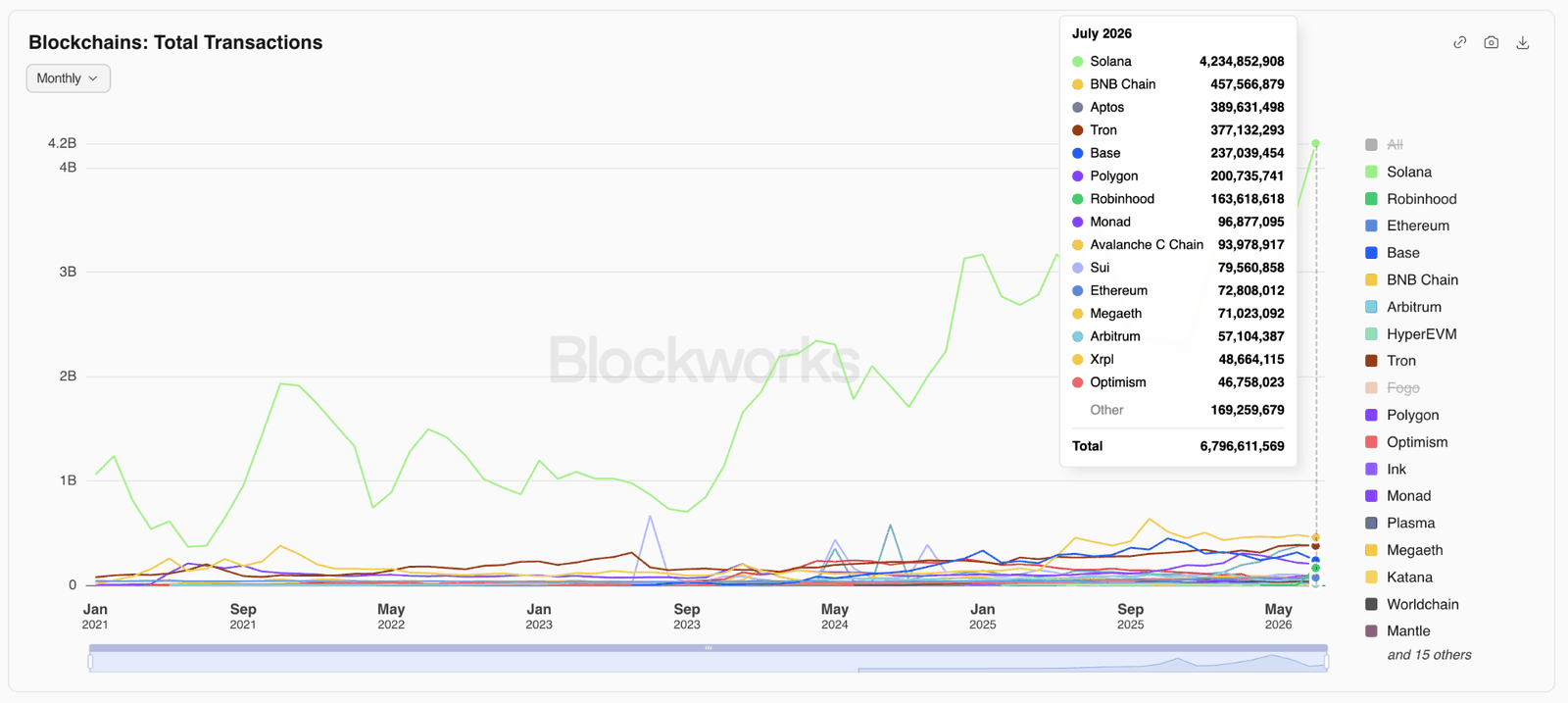
Traditional financial institutions such as Visa, JPMorgan, BlackRock and Fidelity, as well as fintechs such as Stripe, PayPal, Revolut and Robinhood, have already launched, are launching or are preparing products built on digital assets. Blockchain networks today collectively process up to around 3,000 transactions per second, almost 100x more than five years ago – and at token prices that, for many of these networks, are still below where they stood back then.
According to the annual a16z State of Crypto report, roughly 716 million people own digital assets, up 16% year over year, but only 40 to 70 million use them actively. It is precisely in this gap that we see the opportunity for the coming years. Even so, the number of mobile crypto wallet users reached all-time highs last year.
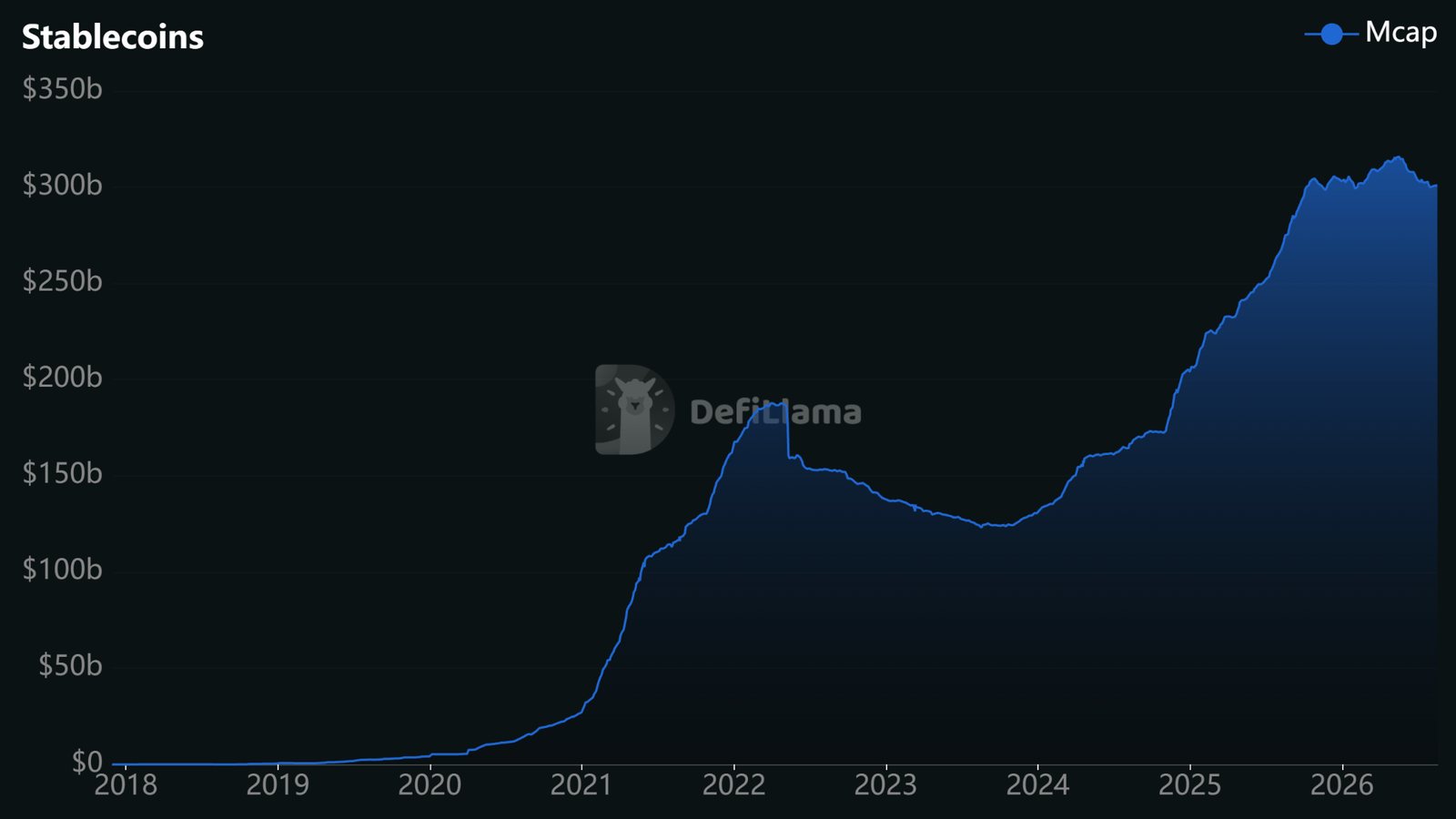
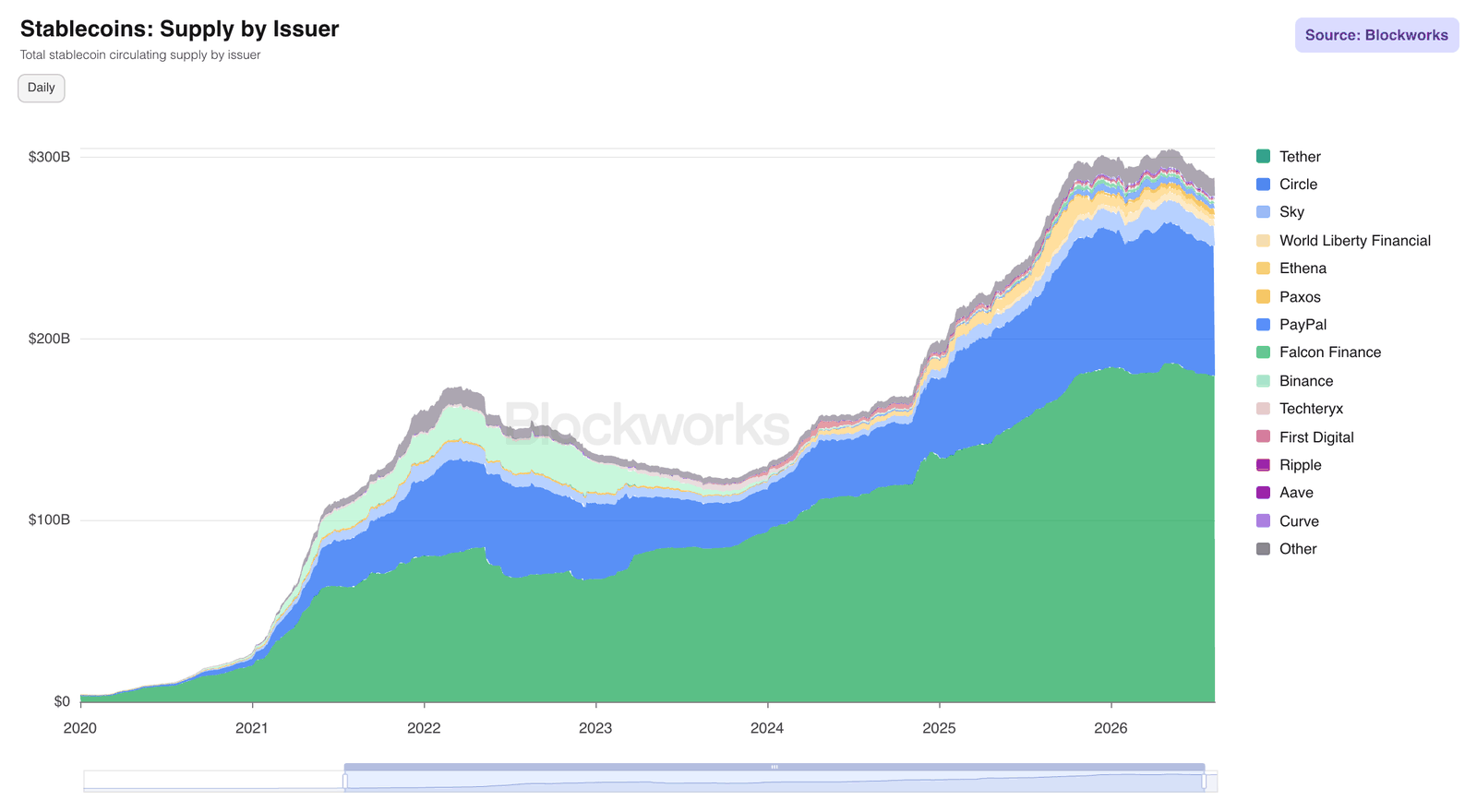
Annual stablecoin transaction volume has reached $46 trillion (roughly $9 trillion after adjusting for intra-exchange transfers and MEV), putting it in direct competition with Visa and PayPal. Moreover, the supply of stablecoins in circulation has grown almost without interruption, regardless of the prices of other digital assets. Over the past six years it has grown from single-digit billions to more than $300 billion, and Citi projects $2 to $4 trillion by 2030.
Bitcoin and ether exchange-traded products today hold more than $175 billion. At the same time, stablecoin issuers hold more than $150 billion in US Treasuries, which collectively makes them the seventeenth-largest holder in the world. More than one percent of all dollars already exist as tokens on smart blockchain networks.
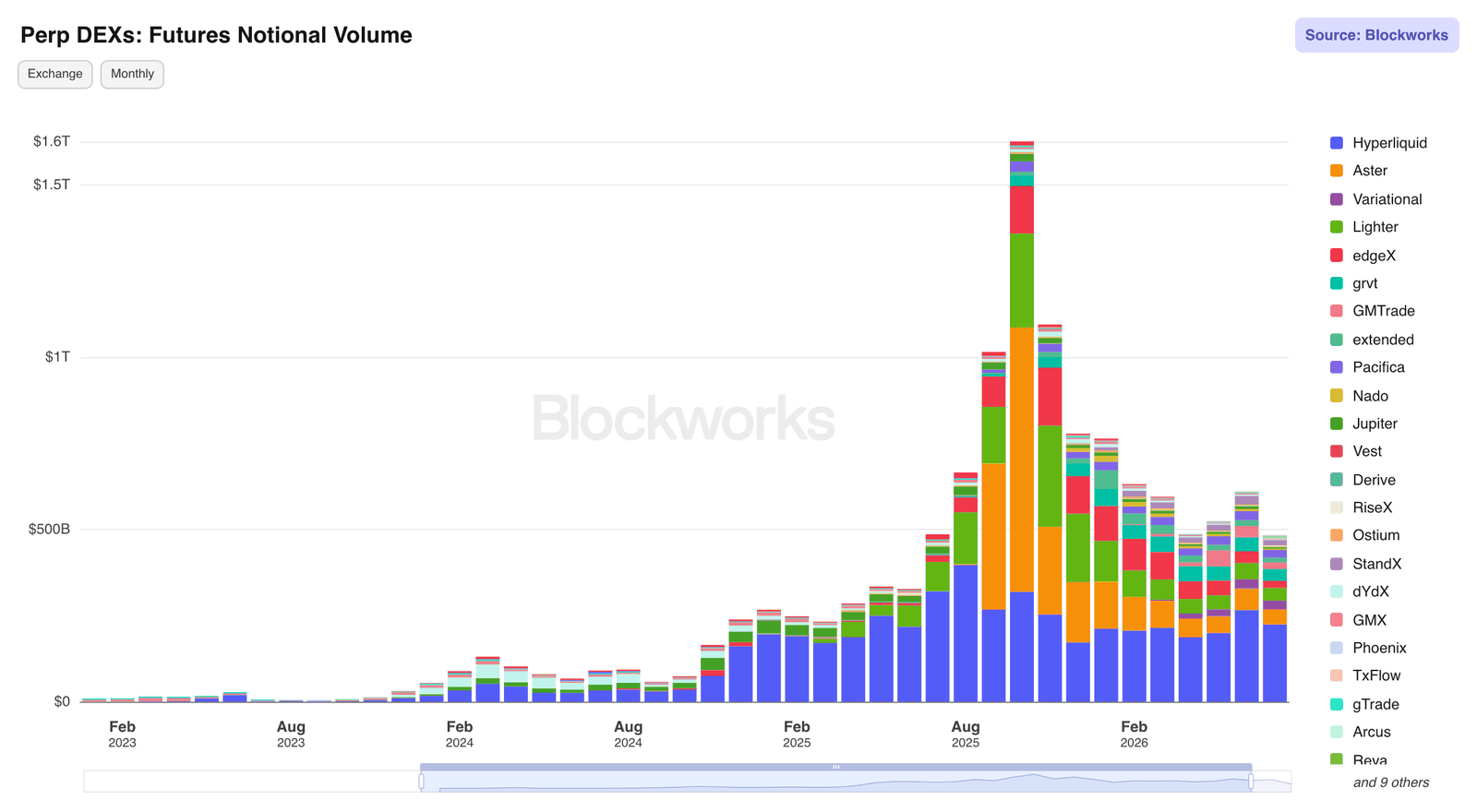
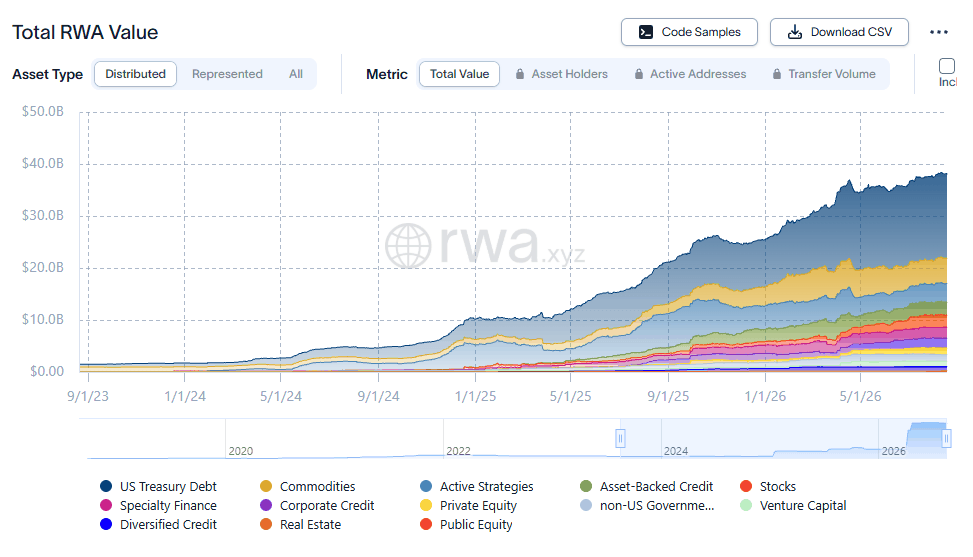
The assets themselves are following the dollars onto these rails. The value of tokenized real-world assets on these networks has reached roughly $31 billion, triple last year's figure, about half of it in US Treasuries. The largest product is BlackRock's tokenized money market fund BUIDL, which runs on nine networks, can be used as collateral on Binance and, since February of this year, also trades on the decentralized exchange Uniswap. More important still is the movement of market infrastructure itself. DTCC, the depository that holds more than $100 trillion in securities in custody, launched a pilot asset tokenization program this year, the SEC approved Nasdaq to settle selected stocks via tokens, and the New York Stock Exchange (NYSE) announced its own platform for round-the-clock trading of tokenized securities. Jeff Sprecher, founder and CEO of Intercontinental Exchange (ICE), the parent company of the NYSE, said at the Bernstein conference in May 2026 that the decentralized exchange Hyperliquid is larger than Nasdaq by derivatives trading volume and is run by a team of eleven people. He confirmed that ICE is in ongoing talks with its founders, is learning from them and is working with regulators on how to offer similar products on regulated exchanges.
At the same time, markets are emerging that did not exist before. Prediction markets now trade more than $40 billion per month, and institutions have begun to value them like exchanges. Kalshi grew from a $2 billion valuation to $22 billion in nine months, and ICE completed a $2 billion investment in Polymarket, whose event-probability data it now distributes exclusively to its institutional clients as a new type of market data. The operator of the world's oldest exchange infrastructure is thus buying a price signal that originates on a blockchain.
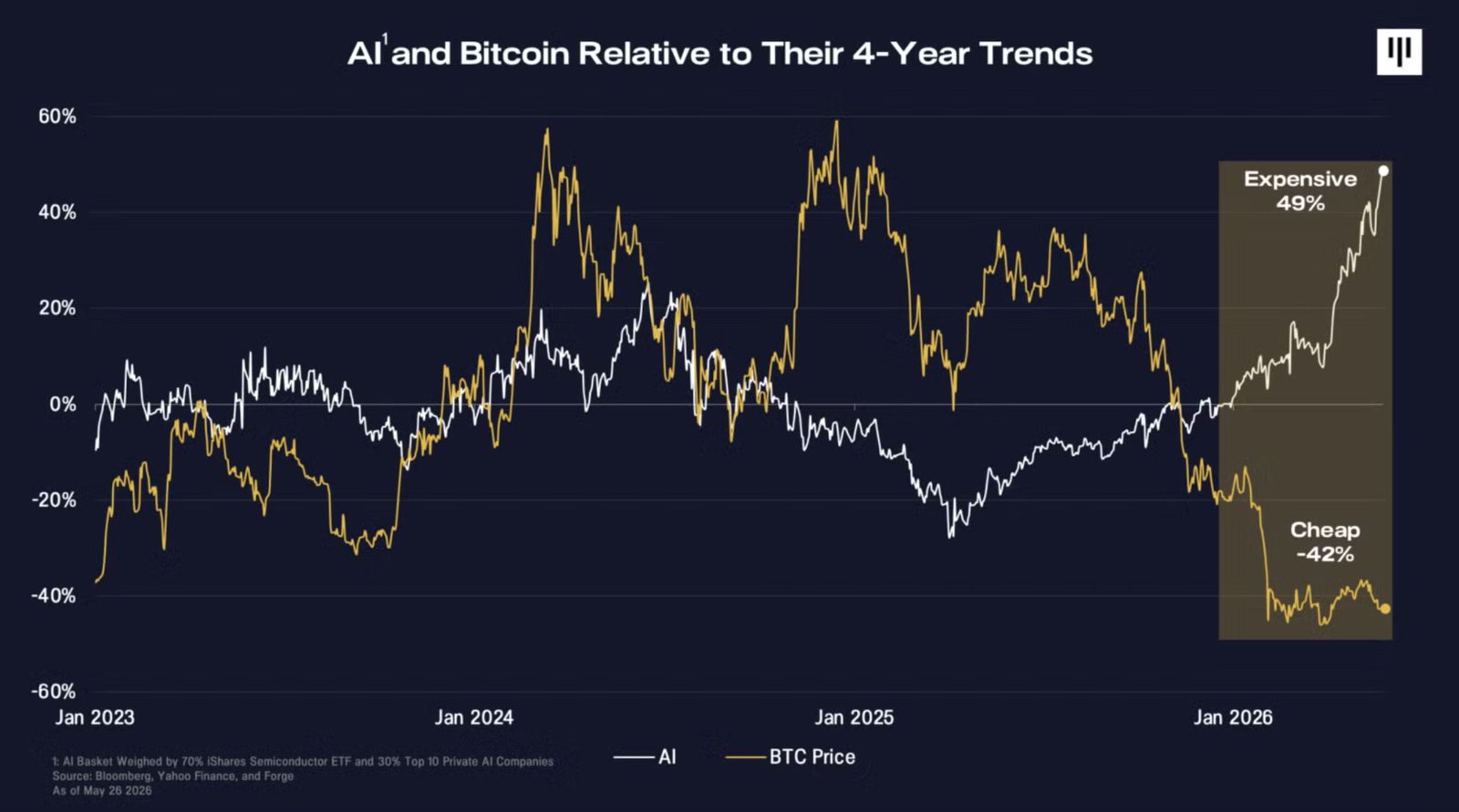
This spring, shares of leading AI companies traded roughly 49% above their four-year logarithmic trend, while Bitcoin traded about 42% below its own – the widest divergence between the two sectors on record. Capital today is flowing preferentially into AI. This divergence should be read as an opportunity. As Pantera Capital argues in its letter on the convergence of AI and blockchain, there is no world in which AI matters and blockchain plays no role in it; programmable money is the infrastructure on which AI systems will transact. More on this in the section The machine-to-machine world and artificial intelligence.
In our view, blockchain is fundamentally the ideal technology for moving money and capital, settling transactions and operating financial markets, and the greatest innovation in the rigid financial sector in decades. The next cycle will be defined by precisely this narrative.
Key investment themes
In the following sections we summarize where digital assets are already having a real impact today and where we believe they are heading. We formulate seven investment themes that we expect to shape the industry over the coming years. These are not short-term trends dependent on bull markets. They are long-term structural themes, and that is exactly why we have devoted our careers to investing in this industry, even though it is still young and often deeply misunderstood, and not only by people outside the field.
Globalization of financial markets
Traditional equity, currency, interest rate, bond and other markets are accessible only in certain parts of the world. Blockchain networks make access global. In developing countries, only a low single-digit percentage of people participate in global financial markets, and the lack of access to assets is one of the main reasons.
Blockchain infrastructure globalizes existing liquid markets, brings transparency to opaque ones, lowers the cost of issuing new assets and opens up trading in entirely new markets. We envision a world in which anyone, anywhere, at any time can trade any asset. Perpetual futures on pre-IPO SpaceX traded on Hyperliquid, for example, were the primary venue for price discovery ahead of the largest IPO in history.
Investors occasionally counter that fintech apps such as Revolut already solve market access today. But these are merely licensed distribution on the old rails: they operate in a few dozen countries at most and must enforce local capital controls, whereas a blockchain is accessible to anyone with an internet connection. The best evidence for our thesis is that Robinhood, Kraken and Revolut itself are moving their back-end and settlement layers onto blockchains – that is, onto precisely the layer we invest in.
Projects that broaden market access and support globalization include, for example:
- protocols that open up opaque markets and thereby make them more efficient: Collector Crypt (collectible cards), Baxus (spirits) and others;
- protocols that create derivatives markets with global access: Hyperliquid, Lighter and others;
- companies creating entirely new markets: Kalshi, Polymarket and others;
- companies and protocols tokenizing traditional markets: Backpack (equities), Ondo (government bonds), Paxos (gold) and others;
- the infrastructure these markets are built on: Jito, Pyth, Chainlink and others.
Settlement layer for stablecoins
Stablecoins and blockchains are the first significant innovations in moving money and settling transactions in several decades. They enable programmable payments and globally accessible assets, lower costs for fintech developers and are beginning to threaten the old monopolies – card networks, correspondent banks and SWIFT – the very institutions that, having initially dismissed them, are now racing one another to adopt them. Visa itself tracks progress on practically every metric on its Visa Onchain Analytics website.
It is remarkable how much of the fintech stack stablecoins simplify. Traditional fintech depends on a long chain of vendors for banking, custody, compliance, fraud prevention and payments. With stablecoins, developers get most of these functions built directly into the underlying smart blockchain network, quickly and cheaply.
Within the digital asset industry, stablecoins have already won. They have replaced fiat as the primary collateral in derivatives and prediction markets, serve as the base asset for most spot pairs, and companies in the industry routinely use them for payroll and operating expenses. But they long ago stopped being an industry-only tool; remittances, contractor payouts and B2B invoices now run on stablecoins, especially where the traditional system is slow or expensive. Stablecoins today process a greater volume of real economic activity than PayPal or Visa, even after adjusting for internal transfers within exchanges. For the first time in history, payment rails outside banks and card networks are operating at a truly global scale.
From an investor's perspective, however, it is not easy to determine where in the stablecoin stack economic value actually accrues. Issuers such as Circle and Tether seem the obvious choice; they are established, and although many other stablecoin startups are emerging, they will find it very hard to compete – with the exception of projects built on new stablecoin models, such as the basis trade run by the stablecoin issuer Ethena. It is also very likely that large banks and financial institutions will issue their own stablecoins.
The consequence of this whole shift is that we will see more and more fintechs built on stablecoins. Smaller players can compete with giants like Revolut by choosing a clearly defined audience and a narrow focus; these fintechs are known as neobanks.
Attention markets and finance as entertainment
We approach this category with great caution. Historically, however, we have had success trading these assets systematically and by clear rules during periods of elevated risk appetite. In such periods, many times more capital flows into the category than out of it, and when they are correctly identified, the short-term odds are on our side.
This category may sound like fiction, but it is a real trend of recent years. Across advanced economies, it is increasingly difficult for the younger generation to reach milestones the previous one took for granted, home ownership above all. And when long-term goals seem out of reach, people begin to take greater – even excessive – risks in financial markets.
An extreme example is South Korea, where the term “yeongkkeul” has been coined for this behavior. Retail investors there trade leveraged products on a massive scale, and speculation – both in the KOSPI index and in digital assets – has become, for part of the younger generation, one of the few perceived paths to success in life, with corresponding consequences in every deeper correction. In June of this year, after an extreme run-up, the Korean index fell almost 45% in a single month, and according to Goldman Sachs, more than 1.2 million retail trading accounts had received margin calls as of 13 July 2026, of which more than 360,000 were completely liquidated. From 13 July to 29 July 2026 the index fell a further 22%. Estimates suggest that around 4% of South Korea's entire adult population was liquidated, but not every adult holds a trading account, so the figure among those who do is probably many times higher. This trend is not limited to South Korea; it applies to most developed countries.
Blockchain networks offer the simplest way in the world to create a publicly traded asset around any theme whatsoever. These are often tokens with zero intrinsic value – memecoins – whose price is purely speculative. It is precisely here that retail speculators concentrate, and they not only stress-test blockchain networks but, above all, use them genuinely and intensively.
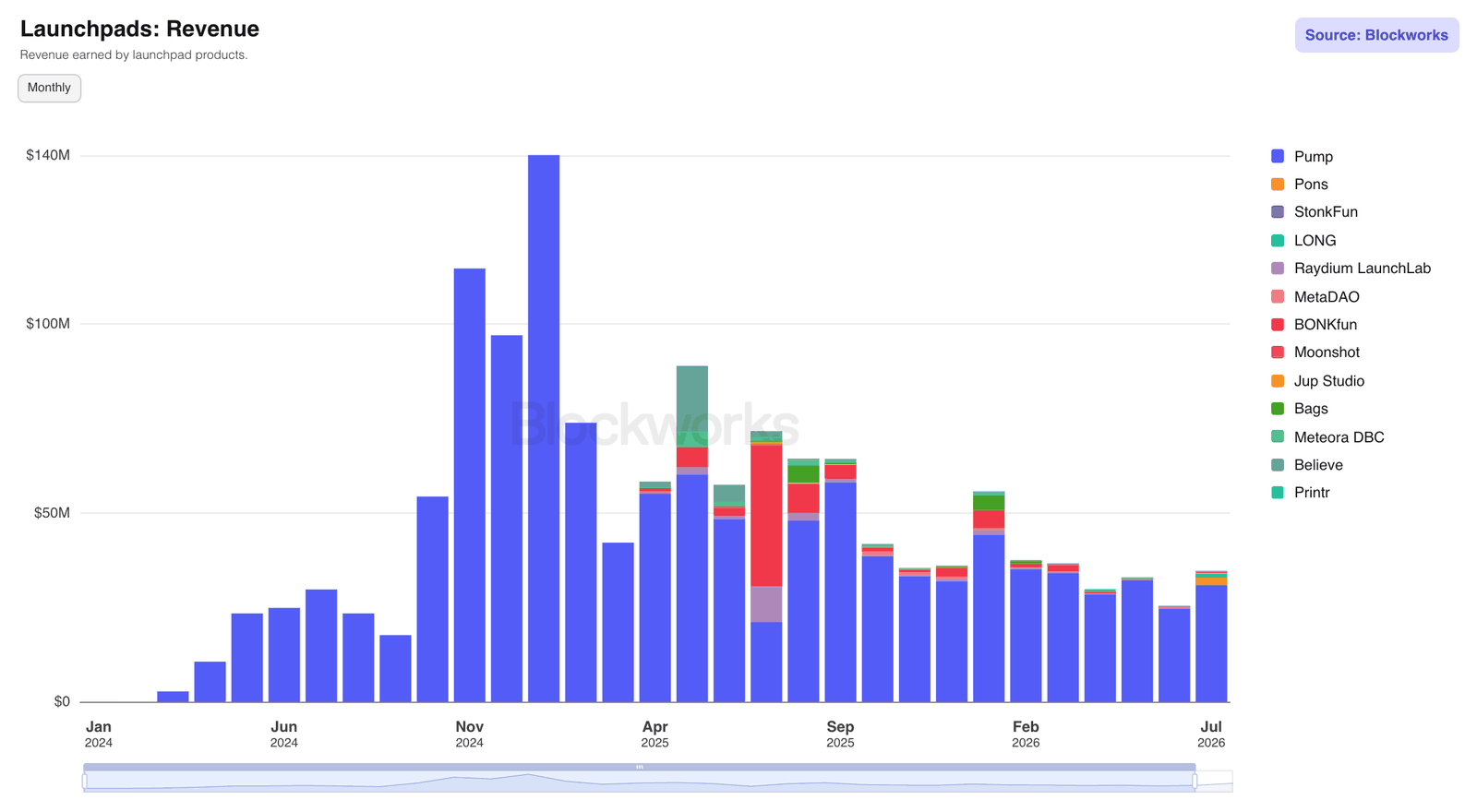
Beyond the speculative tokens themselves, there are projects that monetize this trader behavior: the token launchpad pump.fun, through which retail traders launch new tokens with immediate access to global liquidity, and which currently trades at a P/F (price-to-fees) multiple of around 3x; retail memecoin trading platforms such as the pump.fun app, fomo and axiom; and trading bots such as gm.gn, trojan and others. This infrastructure – which collects fees from these markets regardless of which token happens to be in favor – is of great interest to us, and we own the tokens of these infrastructure projects.
DeFi and credit markets
DeFi (decentralized finance) refers to financial services built as open protocols directly on a blockchain. Trading, lending and yield are provided by public code rather than by a company. The protocol holds collateral, sets interest rates according to supply and demand, and automatically executes liquidations when the value of collateral falls. It runs around the clock, its state is auditable in real time, and it is accessible to anyone with an internet connection. The largest lending protocols, such as Aave and Morpho, manage deposits in the tens of billions of dollars and have survived several complete market cycles.
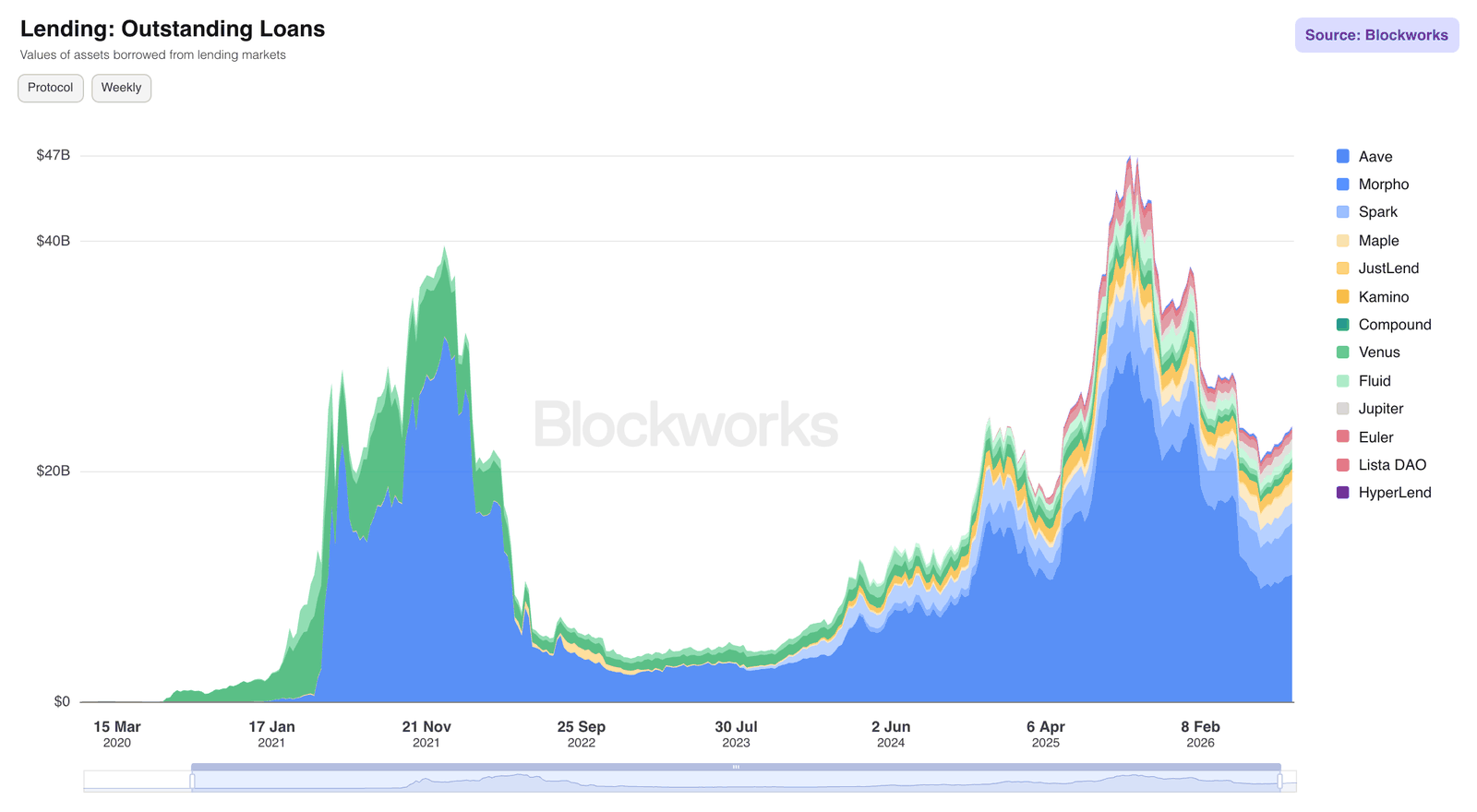
Meanwhile, an entire ecosystem has matured around the protocols, and value in it is created at three levels: in the applications, which own the customer relationship and earn from routing order flow; in the protocols themselves, which hold liquidity and manage risk; and in the connective infrastructure between them. And because the cost of developing software is falling steeply, we expect the number of applications built on top of protocols to grow rapidly.
The strongest confirmation of the thesis is that DeFi is ceasing to be a product for crypto enthusiasts and is becoming the invisible back-end of mainstream applications. Coinbase is building lending products on the Morpho protocol, and other brokers and fintechs are looking in the same direction. The user sees a familiar app, while in the background yield and loans are handled by an open public protocol.
We see investment opportunities at several levels: from the tokens of the DeFi protocols themselves, which once the CLARITY Act passes will be able to flip the revenue switch and pass value on to token holders; through user-facing front-ends, typically wallets, which monetize the volumes flowing through their interfaces; to publicly traded companies building on DeFi, such as Coinbase.
The credit market is the largest financial market in the world and at the same time the least global. Access to it has historically depended as much on where the borrower lives and whom they know as on their actual creditworthiness. On-chain credit markets change this: money and collateral move directly between lenders and borrowers anywhere in the world. And as lending and borrowing tools, prime brokerage services and DeFi vaults (open, actively managed strategies) become commonplace, productive credit can, for the first time, be extended on a truly global basis.
Smart blockchain networks
These networks are the rails used by all the preceding investment themes in this document – stablecoins, tokenized assets, DeFi and applications. For us, two properties are key, and they are partly in tension with each other: neutrality and decentralization on the one hand, performance and ease of use on the other. So far, history has repeatedly shown that it is chiefly the latter that decides whether new users come on board.
The dominant networks are Solana and Ethereum, and their philosophies are polar opposites. Solana bets on an integrated design and maximum performance on a single layer, which has made it the center of retail activity, payments and a large part of the new application wave. Ethereum chose the modular path: the base layer remains a maximally secure and decentralized settlement layer and scales through so-called Layer 2 networks that run on top of it and draw on its security – Base, Arbitrum, Robinhood Chain and many others. The fact that companies like Coinbase and Robinhood are building their own networks precisely as Ethereum L2s is, in our view, the strongest confirmation of the value of this infrastructure.
In the contest between the two philosophies we hold a clear view: we are convinced that performance and ease of use will win the majority of applications and users – and that Solana's integrated approach will therefore prevail. The data are gradually beginning to bear this out: Solana has already overtaken Ethereum's base layer in decentralized exchange volumes and in the number of active users. Moreover, Ethereum's modular path carries a structural problem to which it has yet to find a convincing answer: it is unclear how much of the value created on L2 networks will ultimately accrue to ETH itself. Our view is far from consensus – a significant share of institutions are betting precisely on Ethereum – which makes this one of our most pronounced differentiated views, and one we have held since 2022, when Solana was objectively far behind Ethereum on every metric.
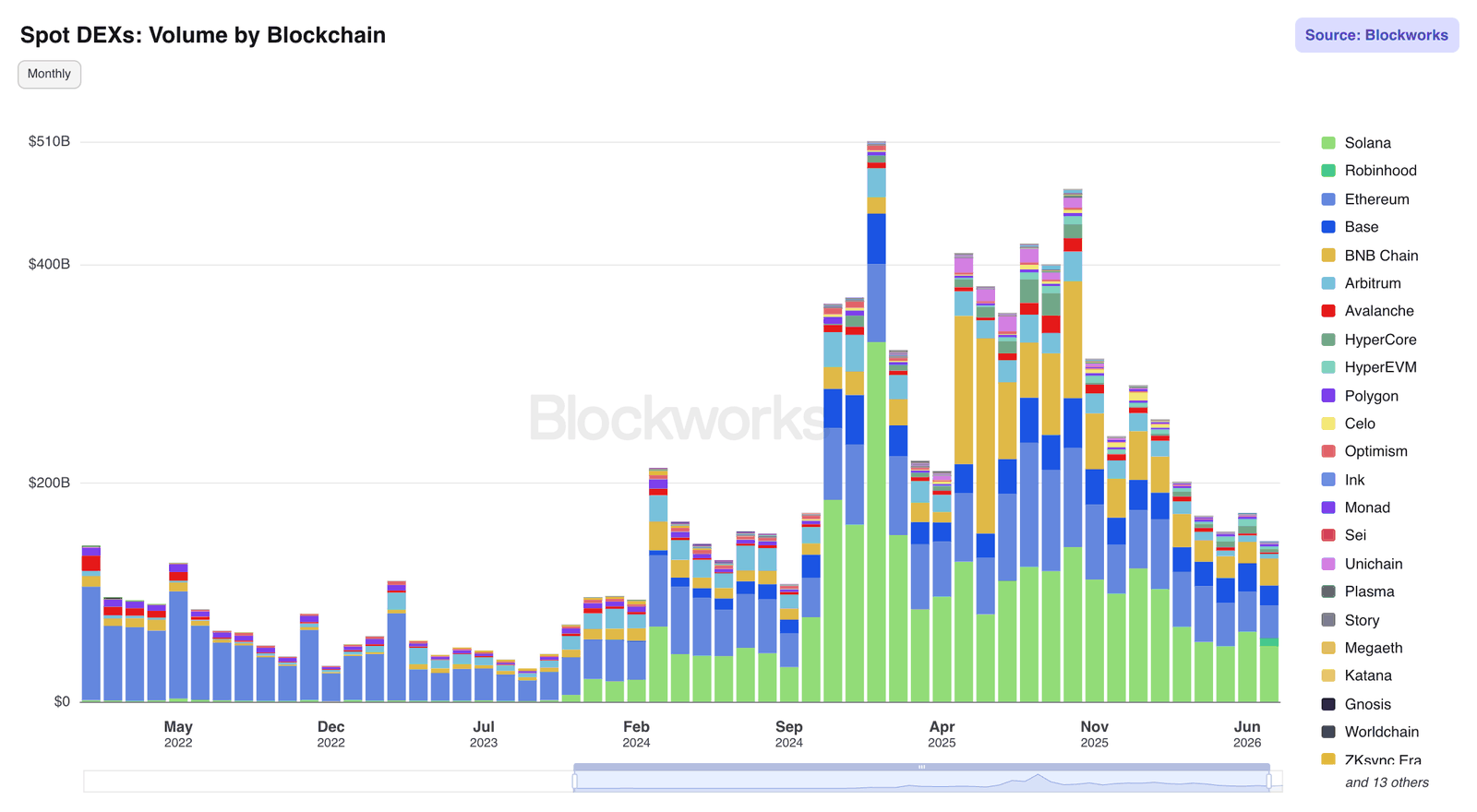
There are of course many other networks besides Ethereum and Solana, and we evaluate all of them on real economic activity, fee revenue, the volume of stablecoins that reside and settle on the network, decentralized exchange volumes, the number of active users and the quality of the applications the network is able to attract and retain. A network's token is a leveraged bet on the growth of its entire economy, which is why these tokens form the core of the directional sleeve of our portfolio.
Bitcoin
As mentioned in the introduction, Bitcoin is a monetary asset whose nature is closer to a commodity. It has its own blockchain network which, unlike smart blockchain networks, is not programmable; the only thing it can do is send bitcoin from wallet A to wallet B. This is not a shortcoming but a deliberate design choice. This minimalism is the source of its predictability, and Bitcoin has by far the most secure network in the industry. Its premise is simple: its quantity is limited, no one can create more, and there never will be more.
The best parallel is gold. Its value, too, consists overwhelmingly of a monetary – that is, speculative – premium rather than intrinsic utility; industrial use accounts for only a fraction of demand and on its own would not justify even a fraction of the current price. Gold's main value proposition is its limited supply, even though, because of ongoing mining, it remains many times more inflationary than Bitcoin. Theoretical demand for both assets is driven by the same macroeconomic forces: record government debt, structural deficits and declining confidence in governments' willingness to stop debasing their currencies. It is precisely these conditions that lie behind the record gold purchases by central banks in recent years, and over a very long horizon Bitcoin is a leveraged bet on the same thesis.
Hundreds of monetary assets that copy, “improve” or modify Bitcoin have emerged over the years, and this category alone is what most people picture when they hear the word cryptocurrency. Yet the claim that Bitcoin is the only member of the category that makes sense and needs no changes or improvements has long ceased to be a minority view and is essentially the consensus of the entire industry. That is why we have deliberately named the category simply Bitcoin.
The only other assets we track in this category, currently without holding any exposure, are Zcash and Monero. Unlike the pseudonymous and fully transparent Bitcoin, they provide complete privacy, and the value of privacy is rising: Europe is debating blanket scanning of private communications (chat control) and, from mid-2027, will prohibit regulated providers from handling anonymous crypto-assets.
We do not push the Bitcoin thesis on anyone; whether to believe in it is for each person to decide. We see no fundamental difference between physical and digital gold, except that the digital version is better in almost every respect. Bitcoin, like gold, is not meant for payments but serves as a reserve asset for storing value; the ease of transferring it is merely an added feature relative to gold. It is globally portable and not subject to capital controls, costs nothing to store, can be held in self-custody, cannot be arbitrarily debased by governments and is almost infinitely divisible.
Gold today has a market capitalization of around $30 trillion, Bitcoin roughly $1.3 trillion. We do not think Bitcoin will overtake gold within a matter of years; that will take decades of gradual maturation. We do think, however, that it will gradually increase its share relative to gold, and it is in this ratio that the upside is many times greater. Institutional demand confirms the thesis. BlackRock's spot bitcoin ETF is among the largest publicly reported positions of Harvard University's endowment, sovereign wealth funds such as Abu Dhabi's Mubadala hold exposure, and last year even the Czech National Bank acquired a test portfolio.
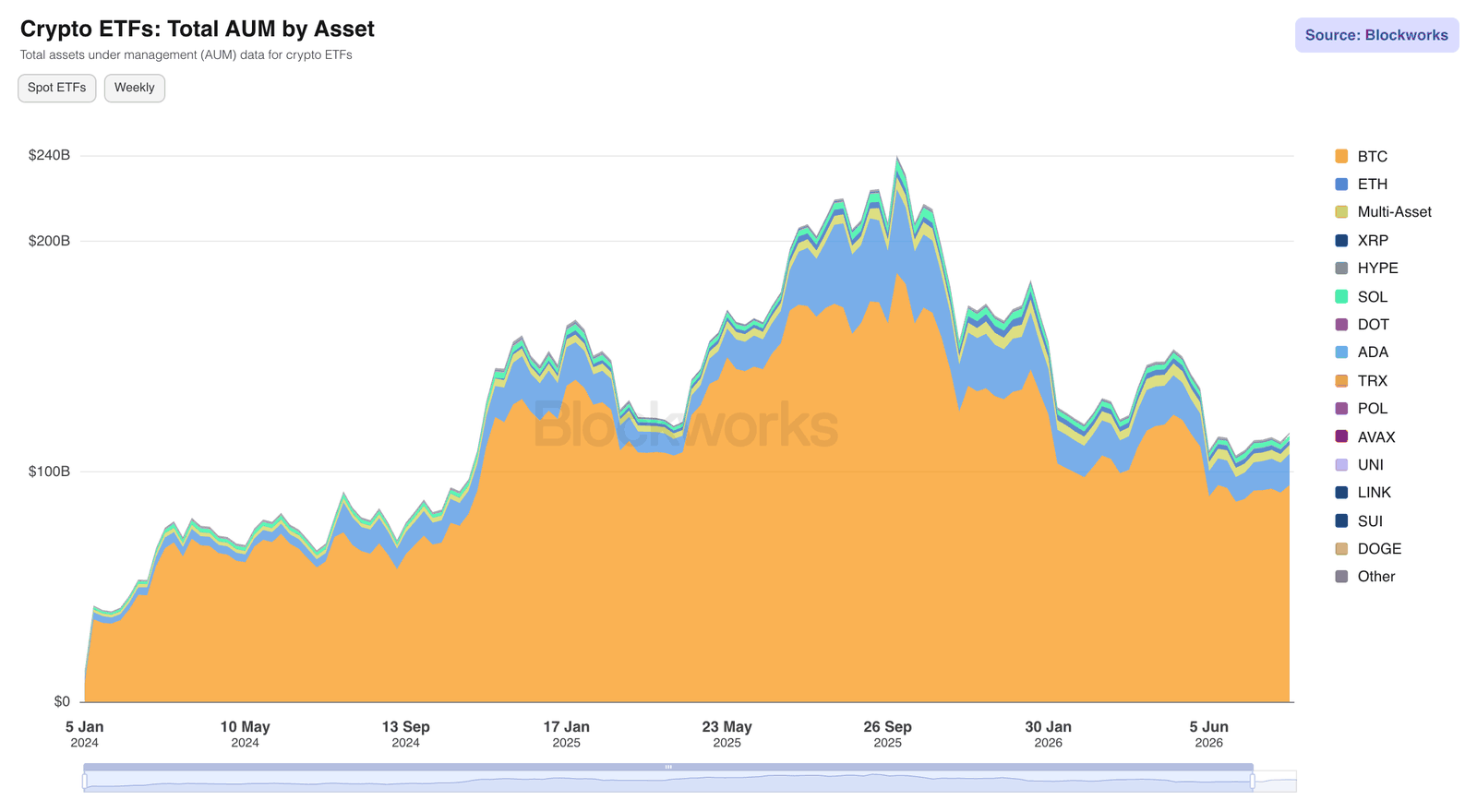
We are also building here on a well-known game-theory paradox: beyond a certain stage of adoption, for institutions, pension funds, endowments and corporate treasuries, not owning Bitcoin becomes a greater risk than owning it. A zero allocation becomes an active bet against an asset that competitors have already added to their balance sheets. The loss from a small allocation is bounded, whereas the career risk and the risk of underperforming the benchmark from omitting it entirely are not. Precisely this mechanism is beginning to play out today and may further accelerate adoption. This is why Bitcoin has a place in our portfolio – and also because, as a multi-strategy fund, we want to hold an asset that is, typologically if not yet in terms of correlation, completely different from everything else we hold as a fund.
Formulating a more specific prediction for this category is difficult, but we believe nothing stands in the way of Bitcoin gradually carving out an ever-larger slice of the pie relative to gold's market capitalization.
The machine-to-machine world and artificial intelligence
An ever-larger share of economic activity on the internet will be driven by AI agents, not humans. Trading bots, pricing systems and advertising auctions already make decisions and execute transactions autonomously today; personal assistants are quickly joining them. Increasingly, humans will merely set goals and limits, while execution is taken over by agents that transact with one another directly, machine to machine.
A simple example: you tell your assistant, “find me a flight to Rome for Friday for under five thousand crowns and buy it.” AI can already find it today. Paying for it is the problem: today's card payment assumes a human at the screen who fills in a form and confirms the purchase with their bank. Either you have to sit there, in which case the assistant has saved you nothing, or you hand over your card and lose control over what it does with it. A stablecoin wallet solves both: you hand it to the agent with rules enforced by code – it may spend at most five thousand crowns, only on flights and only until Friday. The agent pays on its own, instantly, and to anyone in the world.
Even more important are payments between agents themselves. While searching, your assistant buys data from a specialized pricing agent for a fraction of a cent, and that agent in turn pays by the second for the computing power it runs on. A card payment with a fixed fee on the order of tens of cents makes a sub-cent transaction a mathematical absurdity. On top of that, it assumes monthly invoicing, chargebacks and manual payment reconciliation. Stablecoins have no minimum payment size and carry their rules encoded directly within them: an agent can pay for each individual service call, second of compute time or completed task, without contracts, subscriptions or human approval. Payment is also instantly final, and the agent does not need to know the counterparty's bank, country or identity.
The infrastructure for this world is already being built and even has its own standard. Coinbase's x402 protocol uses the HTTP status code 402 Payment Required, which has been reserved in the web protocol since the 1990s and was never used because there was no money a machine could send on its own. It works simply: the agent requests a paid service, the server responds with code 402 and a price, the agent's wallet signs a stablecoin transfer, and the service is delivered immediately. The entire payment happens directly within the web protocol, with no registration, API keys or invoices. More than 165 million transactions have already passed through x402, although a significant share is still test traffic, and Google has built it in as the crypto settlement option in AP2, its agent payments standard, which it is developing with more than sixty partners, including Mastercard and PayPal. The standard itself is open and free, so value will accrue in the layers beneath it: to the networks on which the payments settle, to stablecoin issuers and to the wallet infrastructure that agents will use.
The first products are emerging as well. Trading bots are moving capital on-chain, and infrastructure platforms pay for computing power continuously, as it is consumed. The project that has gone furthest in this direction is Venice, a private AI platform with millions of users that has tokenized computing capacity outright: staking the VVV token gives the holder an ongoing claim on AI inference, and the stable credit unit DIEM makes the same available to developers and agents at a predictable price. The second leg of the theme is cryptographic tools that make it possible to verify what is real on the internet – identity, the provenance of content, the correctness of a computation – without sensitive data having to pile up in giant central databases that are a magnet for attackers, and without having to trust anyone blindly. One interesting project in this area is Zama.
Digital assets thus provide the essential foundation for a world in which internet commerce grows by several orders of magnitude thanks to agents, and stablecoins become its natural payment infrastructure.
Conclusion
The digital asset market is highly cyclical and tends to swing from extreme oversold to extreme overbought conditions and back. Today we are without doubt in the former, much as in 2019 or 2022, but we see one fundamental difference. In 2019 you had to build your long-term thesis on the arrival of something that did not yet exist, and DeFi and the contest between new smart blockchain networks duly arrived. In 2022 the infrastructure was in place, but it was unclear whether anyone would actually start using it. Today the picture is completely different. We no longer ask whether anyone will use it, because stablecoins are moving trillions of dollars, the world's largest banks and exchanges are bringing their products onto blockchains, and the US regulator is writing rules for tokens. The only thing in this industry that is not growing is the price – for now.
When we step back from the seven themes, one common picture emerges. Digital assets are strongest when it comes to the movement of money, the ownership of economies and the functioning of global markets for assets and credit. As settlement, custody and the issuance of assets and dollars move onto blockchain rails, the cost of building a financial product falls. And what the old system cannot offer opens up: markets that did not exist before, and participation by anyone from anywhere.
We believe that one day the majority of the world's economic value will reside on these rails. Money will be programmable, markets open and global, and the coordination of capital an order of magnitude more efficient. At the same time, we know the road will be volatile, and we are here to navigate it guided by data and rules, not by emotions, which – especially in highly speculative markets – push in exactly the opposite direction.
Buy low, sell high.

All data and figures in this report are as of 10 August 2026.